What Happened to the Church Built by Christ in the First Century?
A brief historical account of the first-century Church Of Christ and the reason we were not born in and grew up with it…
IN THE FIRST CENTURY, the Lord Jesus Christ established a Church, which the apostles I called the Church Of Christ (Matt. 16:18; Acts 20:28 Lamsa Translation). When He ascended to heaven, the administration of the Church was entrusted to the apostles.
During that period, the members of the Church Of Christ were steadfast in the faith and in the teachings of Christ that they received through the apostles. The Bible attests:
“And they steadfastly persevered, devoting themselves constantly to the instruction and fellowship of the apostles, to the breaking of bread [including the Lord’s Supper] and prayers” (Acts 2:42 Amplified Bible).
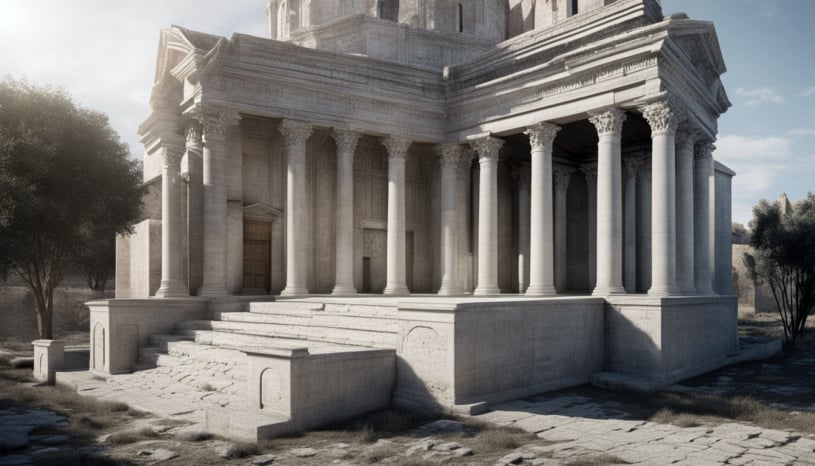
However, it had already been foretold by the Lord Jesus Christ and the apostles themselves that false prophets would rise up and deceive many to turn away from the true faith; and this would take place after the death of the apostles (Matt. 24:4-5, 11; Acts 20:29-30, 25).
Many people disagree with this because the One Who established the Church in the first century is Christ Himself. But what many do not know is that history attests to its apostasy that was also prophesied in the Bible.
AFTER THE APOSTOLIC ERA
What happened to the Church after the death of the apostles? A book, entitled The Story of the Christian Church, states:

“For fifty years after St. Paul’s life a curtain hangs over the church, through which we strive vainly to look; and when at last it rises, about 120 A.D. with the writings of the earliest church-fathers, we find a church in many aspects very different from that in the days of St. Peter and St. Paul.”
(Reference: The Story of the Christian Church by Jesse Lyman Hurlbut, D.D., Pub: 1933, p. 41, Emphasis Mine)
The Church, after the death of the apostles, became “very different” from that in their time. Why was it described as “very different” from the Church in the time of the apostles? The same book further states:
“… when the church found its largest constituency among the Greeks, and especially the mystical, unbalanced Greeks of Asia Minor, all sorts of strange opinions and theories arose, and grew to power in the church. The Christians of the second and third centuries battled not only against a persecuting heathen world, but also against heresies and corrupt doctrines within their own fold.”
(Reference: The Story of the Christian Church by Jesse Lyman Hurlbut, D.D., Pub: 1933, p. 64, Emphasis Mine)
The Church after the time of the apostles is described as very different from that in their time because “strange opinions and theories” and “corrupt doctrines” arose and continued to take power in the succeeding centuries.
FALSE TEACHINGS TOOK POWER
One of the false teachings which arose in the Church after the time of the apostles is about the alleged deity of the Lord Jesus Christ:
“The earliest time known at which Jesus was deified was, after the New Testament writers, in the letters of Ignatius, at the beginning of the second century.”
(Reference: Systematic Theology Vol. 1 by Augustus Hopkins Strong, D.D., LL.D., Pub: 1907, P. 697, Emphasis Mine)
This doctrine was defined by the Council of Nicaea:
“Thus, for example, it was not until 325 A.D., at the Council of Nicaea, that the Church defined for us that it was an article of faith that Jesus is truly God.”
(Reference: Discourses on the Apostles’ Creed by Rev. Clement H. Rock, Nihil obstat: Arthur J. Scanlan, S.T.D. Censor Librorum. Imprimatur: Patrick Cardinal Hayes, Archbishop., Pub: 1960, p. 206, Emphasis Mine)
However, Apostle Paul had already warned the early Christians that there would be people who will teach about “another Jesus”:
“But I fear, lest somehow, as the serpent deceived Eve by his craftiness, so your minds may be corrupted from the simplicity that is in Christ. For if he who comes preaches another Jesus whom we have not preached, or if you receive a different spirit which you have not received, or a different gospel which you have not accepted—you may well put up with it!”
(Reference: II Cor. 11:3-4 New King James Version Emphasis Mine)
What others taught about the nature of the Lord Jesus Christ is very different from what He and the apostles taught. Christ taught that He is “…a Man who has told you the truth…” (John 8:40 NKJV); Apostle Peter taught that Christ is “a Man attested by God to you by miracles, wonders, and signs which God did through Him” (Acts 2:22 NKJV); and Apostle Paul preached that Jesus is “the Man” Who is the “one Mediator between God and men” (I Tim. 2:5 NKJV).
Not only the false doctrine about the deity of Christ but also pagan traditions entered the Church after the time of the apostles:
“The liturgy itself was considerably influenced by the Constantinian revolution. Millions of pagans suddenly entered the church, and some of their customs inevitably crept into the liturgy: the use of the kiss as a sign of reverence for holy objects, the practice of genuflection, devotion to relics, and the use of candles, incense, and other ceremonial features derived from the imperial court.”
(Reference: A Concise History of the Catholic Church by Thomas S. Bokenkotter, Pub: 2005, p. 46, Emphasis Mine)
Paganism also influenced the Church’s form of worship:
“The services of worship increased in splendor, but with less spiritual and hearty than those of former times. The forms and ceremonies of paganism gradually crept into the worship. Some of the old heathen feasts became church festivals with change of name and of worship. About 405 A.D. images of saints and martyrs began to appear in the churches, adored, and worshiped. The adoration of the Virgin Mary was substituted for the worship of Venus and Diana; the Lord’s Supper became a sacrifice in place of a memorial; and the elder evolve from a preacher into a priest.”
(Reference: Story of the Christian Church by Jesse Lyman Hurlbut, D.D., Pub: 1933, p. 79, Emphasis Mine)
These teachings and traditions prove what became of the Church upon the death of the apostles: an “entirely different” church from the one that Christ established and that the apostles administered in the first century. It “had changed its nature” and “had entered its great apostasy”:
“The Imperial Church of the 4th and 5th centuries had become an entirely different institution from the persecuted church of the first three centuries. In its ambition to Rule it lost and forgot the spirit of Christ.
“The Church had Changed its Nature, had entered its Great Apostasy…“
(Reference: Halley’s Bible Handbook by Henry H. Halley, Pub: 1965 p. 760, Emphasis Mine)
SEVERELY PERSECUTED AND KILLED
How about the Church members who stood their ground to uphold the pure gospel? What happened to them? Apostle Paul prophesied:
“For I know this, that after I have departed, fierce wolves will attack you, which will not spare the flock.”
(Reference: Acts 20:29 Lamsa Translation, Emphasis Mine)
The departure that Apostle Paul mentioned was that of which his face would be seen no more; in other words, his death (Acts 20:29, 25; II Tim. 4:6-8). That would be the time when fierce wolves would attack Christ’s disciples or persecute them and not spare the flock or kill them (Matt. 24:11,9).
Who were some of the fulfillments of these prophesied fierce wolves who would not spare the flock? In Ezekiel 22:27, they were government officials who were likened to wolves:
“The government officials are like wolves tearing apart the animals they have killed. They commit murder in order to get rich.”
(Reference: Good News Bible, Emphasis Mine)
History recorded that there were persecutions done by the Roman government and its emperors:
“The most prominent fact in the history of the church through the second and third centuries is the persecution of Christianity by the Roman emperors.
“… from 110 to 313 A.D. the church was subjected to a systematic, relentless, empire-wide series of attempts by the government to crush the ever-growing faith.
“The last, most systematic and most terrible persecution of all the series took place in the reign of Diocletian and his successors, from 303 to 310 A.D….
Diocletian abdicated the imperial throne in 305 A.D., but his subordinates and successors, Galerius and Constantius, continued the persecution for six years.”
(Reference: The Story of the Christian Church by Jesse Lyman Hurlbut, D.D., Pub: 1933, p. 49,53,56-57)
Included in the severe persecutions of the early Christians were the torture and killing of thousands by the government of Rome:
“During the first and violent attack upon the Christian by the government of Rome, thousands of Christians were tortured and put to death, among whom were St. Peter by crucifixion about the year 67 and St. Paul by beheading, perhaps a year later.”
(Reference: Story of the Christian Church by Jesse Lyman Hurlbut, D.D., Pub: 1933, p. 40)
Therefore, what the Bible prophesied about the apostasy that would happen to the Church Of Christ after the apostolic era truly happened and was even recorded in history. Although many disagree that it would not apostatize because it was Christ Himself Who established it, false teachings came in after the death of the apostles. This led the early Christians astray and to turn away from the true faith; and those who stood their ground to uphold the true faith were severely persecuted and put to death. This is the reason we were not born in and grew up with the Church Of Christ established in the first century.
IN CONCLUSION
1
The true Church of Christ in the first-century completely apostatized and became “very different” from the Church in the time of Christ and the Apostles which adopted “strange opinions and theories” and “corrupt doctrines” that arose and continued to take power in the succeeding centuries gradually becoming as what we know today as the “Catholic Church,” introducing heretical teachings such as the “deity of Jesus Christ” a teaching forewarned by the Apostle Paul of “another Jesus” that they have not preached. As well as many other pagan teachings such as the adoration of Mary and the worship of idols. Thus, an “entirely different” church from the one that Christ established and that the apostles administered in the first century. It “had changed its nature” and “had entered its great apostasy.” Million were led astray and among those who remained faithful were tortured and put to death.
TO LEARN MORE about the Apostasy or the restoration of the true Church built by Christ, you may visit the following links below:
The Apostasy
AFTER THE DEATH of Jesus Christ and His Apostles, the Apostasy took place. Christians were hunted down, persecuted, and killed, causing the church to drift from the original teachings of Christ and His Apostles. False teachings emerged, leading to the contamination of the pure doctrine. With the Apostles no longer around to defend the truth, the Church Of Christ evolved into a different organization ( the Catholic Church), adopting many pagan rituals and deviating from the pristine gospel established by Christ. This era is known as the “Great Apostasy.”
The Third Group of Christ
THE TRUE CHURCH of Christ is Comprised of 3 Groups. Before Christ’s ascension to heaven, He prophesized about His other sheep (the third group of people) or flock that were not part of His flock then. The flock being the Church of Christ (Acts 20:28 Lamsa). Christ said he will call his other sheep “in the future” they will be one flock or Church of Christ:
“I have other sheep too. They are not in this flock here. I must lead them also. They will listen to my voice. IN THE FUTURE there will be one flock and one shepherd.” (John 10:16 Easy-to-Read Version, Emphasis Mine)

Reach Out
If you wish to acquire a deeper understanding of our Church Doctrines and have any questions, please do not hesitate to reach out to us. We would be delighted to direct you to one of our local resident ministers in your vicinity. Kindly include any queries you may have so that we may forward your inquiry in advance. Thank you.

Please note, we only read and respond to messages that do not contain hate speech or insults...
“Do not let unwholesome [foul, profane, worthless, vulgar] words ever come out of your mouth, but only such speech as is good for building up others, according to the need and the occasion, so that it will be a blessing to those who hear [you speak].”
(Eph. 4:29, Amplified Bible)
“Love endures with patience and serenity, love is kind and thoughtful, and is not jealous or envious; love does not brag and is not proud or arrogant. It is not rude; it is not self-seeking, it is not provoked [nor overly sensitive and easily angered]; it does not take into account a wrong endured.”
(1 Corinthians 13:4-5, Amplified Bible)