The Origin of Other Churches

She gave birth to the harlots of the world…

MANY PEOPLE HAVE the notion that all the established churches today begin with Christ. Others wonder why there is such a proliferation of churches that conflict with one another in their doctrinal position. In fact, there is only one Church established by Christ with one faith and one doctrine. After the departure of Christ and the apostles, the Church of Christ fell into apostasy, facing heavy persecution by the catholic authorities. This is recorded in history as the “Grand Inquisition.” Those who remained faithful were either tortured or burned at the stake. Those who survived and evaded persecution eventually passed away from natural causes, ultimately leading to the complete and total apostasy of the First-Century Church of Christ.


Let no one in any way deceive you, for it will not come unless the apostasy comes first, …” [ II Thessalonians 2:3 New American Standard Bible, Emphasis Mine]

“Then many false prophets will rise up and deceive many… Then they will deliver you up to tribulation and kill you, …”  [Matthew 24:11, 9  New Kings James Version, Emphasis Mine]


Historical records indeed confirm the extreme persecution and turning away of the church as prophesied by Christ and His apostles. Over time, the church underwent a gradual transformation, evolving into a completely different organization that adopted many pagan rituals and man-made doctrines that diametrically opposed the pristine teachings of the first-century church becoming an “apostate church.”
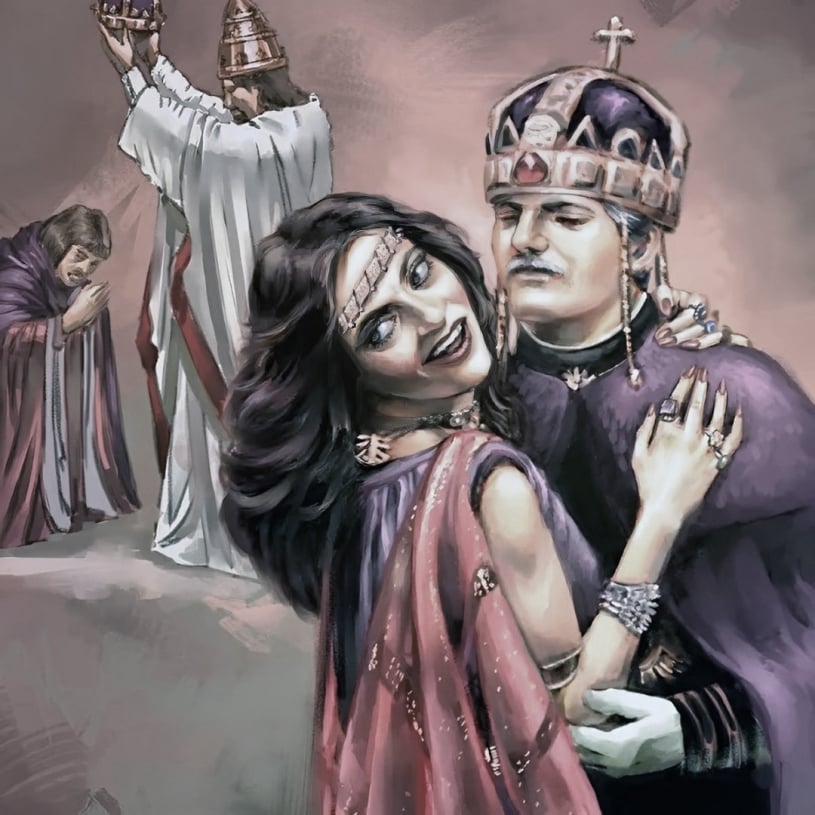
HOW THE BOOK OF REVELATION DESCRIBES THE APOSTATE CHURCH

The Bible describes the “apostate church” as the “mother of harlots”:

“Then one of the seven angels who had the seven bowls came and talked with me, saying to me, “Come, I will show you the judgment of the great harlot who sits on many waters, …

“And on her forehead a name was written: MYSTERY, BABYLON THE GREAT, THE MOTHER OF HARLOTS AND OF THE ABOMINATIONS OF THE EARTH.” (Revelation 17:1,5 NKJV, Emphasis Mine)
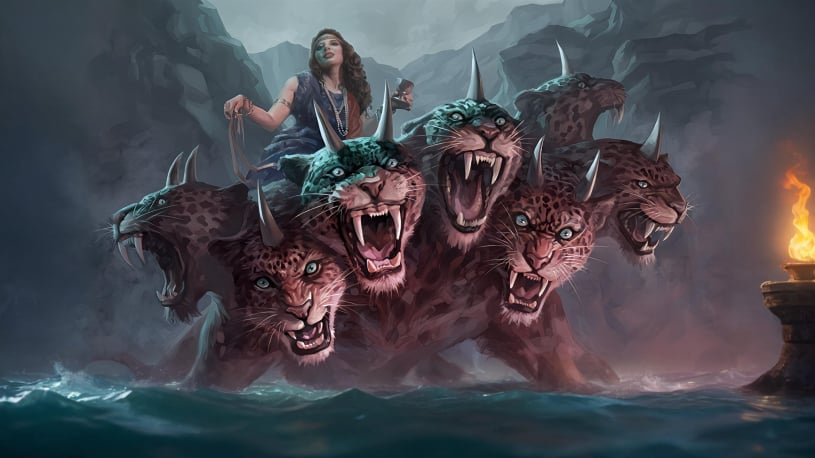
The Church built by Christ is likened to a “chaste virgin” (cf. II Cor. 11:2), so the “harlot” symbolizes the false church. However, the Book of Revelation mentions “mother of harlots.” Thus, the book of Revelation is referring to the “false church,” which is the mother of other false churches, just as a mother has offspring; likewise, this Harlot will give birth to other churches; thus, they are also false churches for they are the offspring of the harlot which is why she is the “mother of harlots,” thus, they are harlots too. The Book of Revelation also gave us the “marks” to identify the “mother of harlots”: she is a “woman seated upon many waters” and called “Babylon.” What does it mean that the “mother of harlots” is seated upon many waters? In Revelation 17:5, this is what it says:

“Then one of the seven angels who had the seven bowls came and talked with me, saying to me, ‘Come, I will show you the judgment of the great harlot who sits on many waters,..
“Then he said to me, ‘The waters which you saw, where the harlot sits, are peoples, multitudes, nations, and tongues.”
(Reference: Revelation 17:1, 15 NKJV,-Emphasis Mine)
“Universal” is what “seated upon many waters” meant because the “waters” are “peoples, multitudes, nations, and tongues.” Now, the Catholic authorities themselves testify that “Babylon” referred to Rome:
Babylon: RomeA metaphor probably founded on Jewish usage.”
(Reference: I Peter 5:13 Footnote, Douay-Rheims,Emphasis Mine)
Which church claims to be “universal”?
“The word ‘Catholic’ means ‘universal,’ ‘extending all over the world’.”
(Reference: A Catholic Catechism. Pub: New York Herder and Herder, 1958, p. 129, Emphasis Mine)
Which church claims to be universal and bears the name of Rome?
“The Church is called Roman Catholic because its chief ruler is the lawful bishop of Rome.”
(Reference: A Catholic Catechism. Pub: New York Herder and Herder, 1958, p. 129, Emphasis Mine)
Thus, the Roman Catholic Church is the fulfillment of the “mother of harlots” mentioned in the Book of Revelation – the apostate church which is the mother of other false churches.

THE "MOTHER OF HARLOTS"

What other churches branched out of the Catholic Church? Let us take a look at the history of the Catholic Church:
THE NESTORIAN CHURCH AND MONOPHYSITES CHURCHES
Since the fourth century AD, a number of Eastern churches separated from the Catholic Church:
“To find a time when there was one Eastern Church we must go back to the centuries before the Council of Ephesus (431). Since that council there have been separate schismatical Eastern Churches whose number has grown steadily down to our own time. The Nestorian heresy left a permanent Nestorian Church, the Monophysite and Monothelite quarrels made several more, the reunion with Rome of fractions of every Rite further increased the number, and quite lately the Bulgarian schism has created yet another; indeed it seems as if two more, in Cyprus and Syria, are being formed at the present moment (1908).”
(Reference: Catholic Encyclopedia, s.v. “Eastern Churches,” https://www.newadvent.org/ cathen/05230a.htm, Emphasis Mine)

The Council of Ephesus in 431 AD produced the schism between the Nestorians and the Catholics, and left a permanent Nestorian Church:

“The Nestorians are now only a pitiful remnant of what was once a great Church… In any case the rejection of the Council of Ephesus (431) by these Christians in Chaldea and Mesopotamia produced a schism between them and the rest of Christendom. When Babaeus, himself a Nestorian, became catholicos, in 498, there were practically no more Catholics in those parts… protected by the Persian kings, the Nestorian Church flourished around Ctesiphon, Nisibis (where the school was reorganized), and throughout Persia. Since the schism the catholicos occasionally assumed the title of patriarch. The Church then spread towards the East and sent missionaries to India and even China.”
(Reference: Catholic Encyclopedia, s.v. “Eastern Churches,” https://www.newadvent.org/ cathen/05230a.htm, Emphasis Mine)
Another schism in the Catholic Church in the fourth century AD:
All the other separated Eastern Churches are formed by the other great heresy of the fourth century, Monophysitism. There are first the national Churches of Egypt, Syria, and Armenia.”
(Reference: Catholic Encyclopedia, s.v. “Eastern Churches,” https://www.newadvent.org/ cathen/05230a.htm, Emphasis Mine)

The Monophysite controversy in the Catholic Church produced the Coptic Church (the Church of Egypt), the Ethiopic Church (the Church of Abyssinia, or Ethiopia), the Jacobite Church (the Monophysite Church of Syria), the Armenian Church (the Church of Armenia), and the Malabar Church of India.

Thus, the Nestorian Church and the Monophysite churches are the daughters of the Catholic Church from the fourth century AD.

THE EASTERN ORTHODOX CHURCHES

Through the early centuries, the Catholic Church developed a “divergent line” that resulted in the split of the Catholic Church into two churches:
“The Church developed along two divergent lines: East and West. The emperor and the bishop of Constantinople, who was called a patriarch, shared the leadership in the East. But the bishop of Rome acted as both civil and religious leader in the West…
The East and the West differed on more than leadership and language. Increasing disagreements in theology and ideology were compounded by personality conflicts. Moreover, spirituality in the East and the West had distinctly different flavors. The East concentrated on the mystical and symbolic approach to faith. The West stressed properness and uniformity.
“This difference in perspective along with political and geographic preferences, split Christianity (Catholicism) in 1054 into the Eastern Orthodox Church and the Western Roman Catholic Church.”
(Reference: Why Do Catholics…? By Altemose, Sr. Charlene, MSC. Makati, Philippines: Salessiana Publishers, Inc., 1989, pp. 2-3, Emphasis Mine)

Their differences “split” the Catholic Church in 1054 AD into Eastern Orthodox Church and Western Roman Catholic Church. 

“The first of the Eastern Churches in size and importance is the great Orthodox Church. This is, after that of the Catholics, considerably the largest body in Christendom. The Orthodox Church now counts about a hundred millions of members. It is the main body of Eastern Christendom, that remained faithful to the decrees of Ephesus and Chalcedon when Nestorianism and Monophysitism cut away the national Churches in Syria and Egypt. It remained in union with the West till the great schism of Photius and then that of Caerularius, in the ninth and eleventh centuries. In spite of the short-lived reunions made by the Second Council of Lyons (1274) and the Council of Florence (1439), this Church has been in schism ever since… The separation of the various national Orthodox Churches from the patriarchate of Constantinople forms the only important chapter in the modern history of this body… Other causes have led to the establishment of a few other independent Churches, so that now the great Orthodox communion consists of sixteen independent Churches, each of which (except that of the Bulgars) is recognized by, and in communion with, the others.”
(Reference: https://www.catholic.com/ encyclopedia/eastern-churches,Emphasis Mine)
The Eastern Orthodox Church had split into sixteen independent churches; these are the following:
“(1) The Great Church, that is, the patriarchate of Constantinople that takes precedence of the others. It covers Turkey in Europe (except where its jurisdiction is disputed by the Bulgarian Exarch) and Asia Minor. Under the Ecumenical Patriarch are seventy-four metropolitans and twenty other bishops. Outside this territory the Patriarch of Constantinople has no jurisdiction.

(2) Alexandria (covering all Egypt as far as it is Orthodox) with only four metropolitans.

(3) Antioch, extending over Syria from the Mediterranean to the Euphrates as far as any Orthodox live so far East, touching the Great Church along the frontier of Asia Minor to the north and Palestine to the south, with twelve metropolitans and two or three titular bishops who form the patriarchal curia.

(4) Jerusalem, consisting of Palestine, from Haifa to the Egyptian frontier, with thirteen metropolitans.

(5) Cyprus. It is the old autocephalous Church, with an archbishop and three suffragans.

(6) Russia. (independent since 1589). This is enormously the preponderating partner, about eight times as great as all the others put together. The Holy Synod consists of three metropolitans (Kiev, Moscow, and Petersburg), the Exarch of Georgia, and five or six other bishops or archimandrites appointed at the czar’s pleasure. There are eighty-six Russian dioceses, to which must be added missionary bishops in Siberia, Japan, North America, etc.

(7) Carlovitz (1765), formed of Orthodox Serbs in Hungary, with six suffragan sees.

(8) Czernagora (1765), the one independent diocese of the Black Mountain.

(9)  The Church of Sinai, consisting of one monastery recognized as independent of Jerusalem in 1782.

(10) The Greek Church (1850): thirty-two sees under a Holy Synod on the Russian model.
 
(11) Hermannstadt (Nagy-Szeben, 1864), the Church of the Vlachs in Hungary, with three sees.

(12) The Bulgarian Church under the exarch, who lives at Constantinople. In Bulgaria are eleven sees with a Holy Synod. The exarch, however, claims jurisdiction over all Bulgars anywhere especially in Macedonia.

(13) Czernovitz (1873), for the Orthodox in Austria, with four sees.

(14) Servia (1879), the national Church of that country, with five bishops and a Holy Synod.
 
(15) Rumania (1885), again a national Church with a Holy Synod and eight sees.

(16) Herzegovina and Bosnia, organized since the Austrian occupation (1880) as a practically independent Church with a vague recognition of Constantinople as a sort of titular primacy. It has four sees.”
(Reference: https://www.catholic.com /encyclopedia/eastern-churches,Emphasis Mine)

THE "MOTHER CHURCH" OF OTHER WESTERN CHURCHES

The Roman Catholic Church is also the “mother church of the Protestant and other churches that broke away from it”

The Roman Catholic Church is thought by some to be the mother church of the Protestant and other churches that broke away from it over time. Prominent among these are Lutheran, Reformed, Anglican churches and other Christian faith communities formed over time from these.”
(Reference: Wikipedia, s.v. “Mother Church,”https://web.archive.org /web/20140526152323;   https://en.wikipedia.org/ wiki/Mother_church, March 5, 2009,Emphasis Mine)
Lutheranism, one of the leading Protestant denominations, spread from Germany to Poland, the Baltic Provinces, Hungary, Transylvania, the Netherlands, Denmark, the Scandinavians, and in the United States:
“Lutheranism dates from 31 October, 1517, when Luther affixed his theses to the church door of the castle of Wittenberg. Although he did not break with the Catholic Church until three years later, he had already come substantially to his later views on the plan of salvation. The new teachings, however underwent a great change after Luther’s return from Wartburg (1521). Before he died (18 Feb., 1546), his teachings had been propagated in many states of Germany in Poland, in the Baltic Provinces, in Hungary, Transylvania, the Netherlands, Denmark and Scandinavia. From these European countries Lutheranism has been carried by emigration to the New World, and in the United States it ranks among the leading Protestant denominations.”
(Reference: Catholic Encyclopedia, s.v. “Anglicanism” https://www.newadvent.org/ cathen/04958a.htm, Emphasis Mine)
The Calvinistic church is another daughter of the Roman Catholic Church and is the second form of Protestantism caused by the 16th-century Reformation. In Europe, Calvinistic churches were known as “Reformed Churches,” while in Scotland, they were called “Presbyterian Church.” This is why both “Reformed Churches” and “Presbyterian Churches” can be found in the United States. Immigrants from continental Europe brought the Reformed Churches to the United States, while immigrants from Scotland brought the Presbyterian Churches.
Another daughter of the Roman Catholic Church are the Anglican churches:

“Before the breach with Rome under Henry VIII there was absolutely no doctrinal difference between the faith of Englishmen and the rest of Catholic Christendom, and “Anglicanism”, as connoting a separate or independent religious system, was unknown… When news of the papal decision against the divorce reached England, Henry VIII gave his assent to four anti-papal statutes passed in Parliament in the spring of 1534, and in November the statute of the Royal Supremacy declared the King to be Supreme Head of the English Church (without the limiting clause of 1532), and an oath was prescribed, affirming the Pope to have no jurisdiction in the realm of England.”

(Reference: Catholic Encyclopedia, s.v. “Anglicanism” https://www.newadvent.org/ cathen/01498a.htm, Emphasis Mine)
With the separation of the Church of England from the Roman Catholic Church, another form of Protestantism emerged, Anglicanism. However, Anglicanism produced not only one church (the established Church of England) but there were offshoot churches:

“A term used to denote the religious belief and position of members of the established Church of England, and of the communicating churches in the British possessions, the United States and elsewhere. It includes those who have accepted the work of the English Reformation as embodied in the Church of England or in the offshoot Churches which in other countries have adhered, at least substantially, to its doctrines, its organization, and its liturgy. Apart from minor or missionary settlements, the area in which Anglicanism is to be found corresponds roughly with those portions of the globe which are, or were formally, under the British flag.”

(Reference: Catholic Encyclopedia, s.v. “Anglicanism” https://www.newadvent.org/ cathen/01498a.htm, Emphasis Mine)

The Anglican churches in the United States came to be called “Episcopal Churches.” The Methodist churches are offshoots of the Church of England, and so are the Puritans. Holiness and Pentecostals are heavily influenced by Wesleyanism (the teachings of John Wesley, the founder of Methodism).

Other churches branched out of the Roman Catholic Church, and many churches also branched out of those that branched out of the Roman Catholic Church, all inheriting in one form or another the corrupted teachings or doctrines of the “mother church.” In light of this fact, it is not wrong to say that the Catholic Church is indeed the “mother church” — the “mother of false churches” and thus, “THE MOTHER OF HARLOTS.

According to a consensus from the Center for the Study of Global Christianity, as of mid-2023, there are 47,300 Christian denominations/rites. It is projected that this number will increase to 49,000 by 2025 and reach 64,000 by 2050. The percentage growth of denominations is higher or equal to the percentage of growth of the Christian population and growth of congregations since 1900. Globally the largest Protestant/Independent congregations, and fastest growing mega-denominations, are located in Asia, Africa, and Latin America and today Christianity is a religion with over 2.4 billion followers worldwide, all adhering to a wide range of conflicting biblical doctrines and interpretations with profound disagreements that exist among their beliefs and practices, yet each group passionately maintains and asserts its claim that theirs is the true church or religion belonging to Christ!

If these religions do not belong to Christ, where can the true church and its teachings be found where one can attain salvation? This will be further explored in the Roadmap Article 3.

IN CONCLUSION

1

The true Church of Christ in the first century apostatized and gradually became the Catholic church biblically defined as “BABYLON THE GREAT, THE MOTHER OF HARLOTS,” a “universal” church that not only was identified as the one to introduce “doctrines of demons,” the “forbidding to marry, and abstain from eating meats” but she herself as the “mother church” gave birth to the many other religions and protestant sects we see today numbering in the tens of thousands worldwide all branching out from one another, fulfilling the biblical prophecy foretold by Christ and His Apostles. For this reason, it is not surprising to encounter many different conflicting teachings and doctrines produced by such churches, all claiming to contain the true teachings of Christ that can lead man to his salvation, but yet they are “false teachers.” Apostle Paul forewarned that these false teachers “will secretly bring in destructive heresies, even denying the Lord who bought them, and bring on themselves swift destruction. And many will follow their destructive ways.” (2 peter 2:1-2 NKJV)

Because of this biblical truth, it is vital to one’s internal soul to listen to the invitation of the Iglesia Ni Cristo (Church Of Christ) to learn the pristine doctrines taught by Christ and His apostles, as recorded in the Holy Scriptures as they were taught and practiced in the first-century church.

There is only one true church established by Christ. This church, the Church Of Christ was biblically prophesied to emerge once again in these last days. With the restoration of the true Church of Christ, man once again has the opportunity to render the proper worship to God that is pleasing before Him to attain life eternal. To continue the roadmap, follow the link below:

.

Roadmap Article 3

The Third Group of Christ

THE TRUE CHURCH of Christ is Comprised of 3 Groups. Before Christ’s ascension to heaven, He prophesized about His other sheep (the third group of people) or flock that were not part of His flock then. The flock being the Church of Christ (Acts 20:28 Lamsa). Christ said he will call his other sheep “in the future” they will be one flock or Church of Christ:
“I have other sheep too. They are not in this flock here. I must lead them also. They will listen to my voice. IN THE FUTURE there will be one flock and one shepherd.” (John 10:16 Easy-to-Read Version, Emphasis Mine)

The Apostasy

AFTER THE DEATH of Jesus Christ and His Apostles, the Apostasy took place. Christians were hunted down, persecuted, and killed, causing the church to drift from the original teachings of Christ and His Apostles. False teachings emerged, leading to the contamination of the pure doctrine. With the Apostles no longer around to defend the truth, the Church Of Christ evolved into a different organization ( the Catholic Church), adopting many pagan rituals and deviating from the pristine gospel established by Christ. This era is known as the “Great Apostasy.”

Reach Out

If you wish to acquire a deeper understanding of our Church Doctrines and have any questions, please do not hesitate to reach out to us. We would be delighted to direct you to one of our local resident ministers in your vicinity. Kindly include any queries you may have so that we may forward your inquiry in advance. Thank you.

Please note, we only read and respond to messages that do not contain hate speech or insults...

“Do not let unwholesome [foul, profane, worthless, vulgar] words ever come out of your mouth, but only such speech as is good for building up others, according to the need and the occasion, so that it will be a blessing to those who hear [you speak].”
(Eph. 4:29, Amplified Bible)
“Love endures with patience and serenity, love is kind and thoughtful, and is not jealous or envious; love does not brag and is not proud or arrogant. It is not rude; it is not self-seeking, it is not provoked [nor overly sensitive and easily angered]; it does not take into account a wrong endured.”
(1 Corinthians 13:4-5, Amplified Bible)