Is Jesus Christ the True God and Creator?

TRUE BELIEVERS OF JESUS since the first century have shared with Apostle Peter his affirmation of faith. Church history witnesses to the fact that many of them, particularly the early Christians, suffered intense persecutions and even death for upholding the conviction that Jesus is the Messiah, the Son of God. Sadly, nowadays, there seems to be a collaborative effort on the part of skeptics to portray a radically different Jesus.


With the persistent attempts to modify the Bible’s portrayal of Jesus, it is not surprising that many Christian-professing churches seek to preserve the real portrait of Jesus by placing emphasis on His unique attributes. Unfortunately, they went beyond the teachings of the Bible to the point of attributing to Jesus qualities that were not attributed to Him by His apostles and the early Christians. In effect, they failed in their attempt to preserve the real portrait of Jesus in the Holy Scriptures.
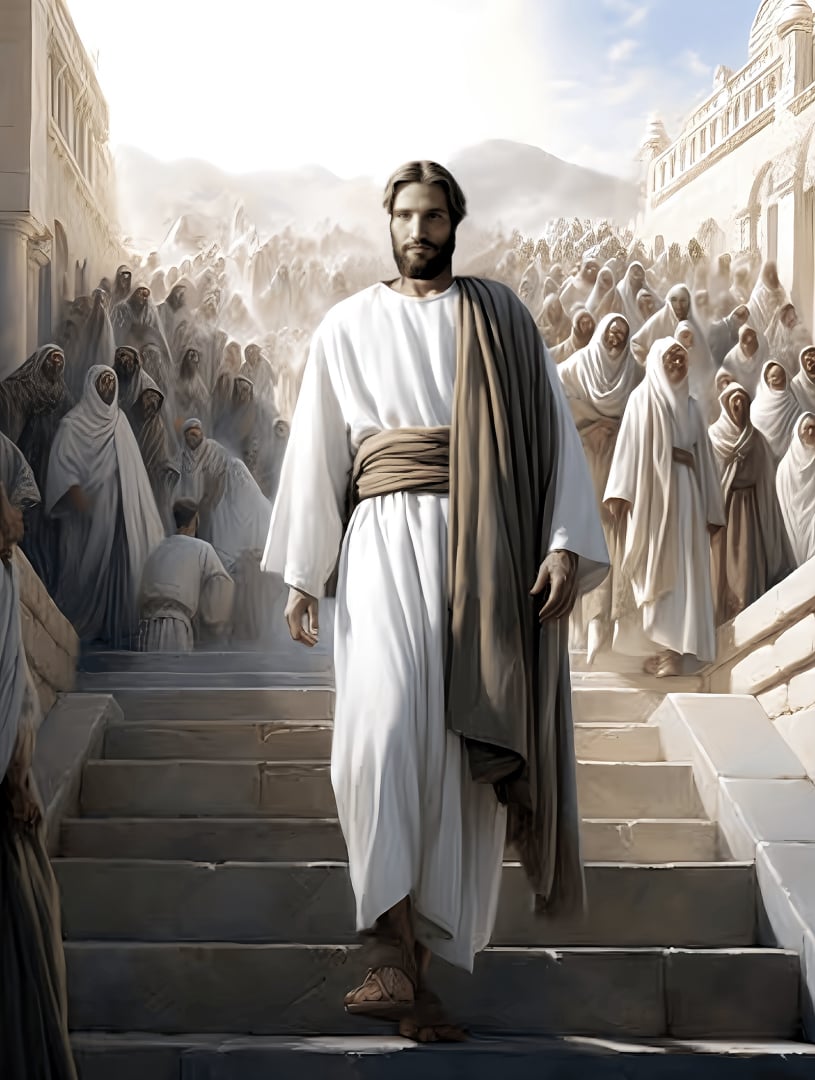
JESUS, THE CREATOR?

Majority of Christian-professing churches attribute to Christ either the role of Creator or co-Creator. They consider this belief as a “necessary truth” to justify their claim that Jesus is the true God. They present verses from the Bible as their bases. One of these verses comes from the Gospel according to Apostle John:
“All things were made through Him, and without Him nothing was made that was made.”
(Reference: John 1:3 New King James Version)
Since Christ is the subject of this verse, proponents of the Christ-is-God doctrine claim that this is, beyond reasonable doubt, a direct reference to Christ’s role as the creator of the world. Hence, they believe that our Lord Jesus Christ has prior existence. They cite the very account of the creation of man to support their belief:
“Then God said, ‘Let us make man in our image, after our likeness…”
(Reference: Genesis 1:26-27 ESV,  Emphasis Mine)
Though the pronouns “us” and “our” refer to any number more than one, yet proponents of the Trinity doctrine are quick to limit “us” and “our” to three—the Father, the Son, and the Holy Spirit. According to them, the doctrine defines the role of Jesus as co-creator with the Father.

COMPARING SPIRITUAL THINGS WITH SPIRITUAL

The Bible is not composed of a single verse. So one must not immediately accept a belief no matter how popular it may seem just because someone cited a verse from the Bible to support it. Instead, they should follow the sound advice of Apostle Paul to compare spiritual things with spiritual (I Cor. 2:13). The doctrine about Jesus’ alleged role as co-creator with the Father should be examined in the light of this biblical principle set forth by Apostle Paul. Noteworthy is the fact that the writers of the Bible never coined the word “co-creator.” The Bible does not support the belief that God had a co-creator. In Isaiah 44:24, God declares:
“… I am the LORD, who makes all things, Who stretches out the heavens all alone, Who spreads abroad the earth by Myself.”
(Reference: NKJV, Emphasis Mine)
The God who spoke in Genesis 1:26 is the same God speaking in this verse. The prefix “co-“ from the term “co-creator” is defined as “together” or “associate” as opposed to the term “alone” which means “unaccompanied” or “unaided.” Moreover, the expressions used in Isaiah 44:24 were “all alone” and “by Myself,” which leave no room for the belief that God had a co-creator.

THERE IS ONLY ONE CREATOR

The early chosen people of God learned from Him that He alone created the world that He is without a co-creator. The profession of faith of God’s early nation was as follows:
You alone are the LORD, Creator of the heavens and all the stars, Creator of the earth and those who live on it, Creator of the ocean and all its creatures. You are the source of life …”
(Reference: Neh. 9:6 Contemporary English Version,  Emphasis Mine)
This essential truth is further proven by the actual account of the creation of man as recorded in Genesis 1:26-27:

“Then God said, ‘Let us make man in our image, after our likeness… So God created man in his own image, in the image of God he created him; male and female he created them’.”

(Reference: Genesis 1:26-27 ESV,  Emphasis Mine)

God created man in His (singular) own image. In the image of God, he (singular) created him. Male and female he (singular) created them. The actual account of man’s creation attests to the fact that God did not have a co-creator. He created man all by Himself. Why then did God say, “Let us make man in our image, according to our likeness”? If God the Father was not talking to the “other persons of the Trinity,” to whom was He talking then? A plain comparison with the terms used in the same book of Genesis and in the book of Revelations guides us to the fact that God has companions that surround His throne or an audience whom He speaks to; His angels, cherubim and many other angels in heaven:

“Then the LORD God said, ‘Behold, the man has become like one of Us’… and He placed cherubim at the east of the garden of Eden. …

All the angels stood around the throne and the elders and the four living creatures, and fell on their faces before the throne and worshiped God. …

“Then I looked and heard the voice of many angels, numbering thousands upon thousands, and ten thousand times ten thousand. They encircled the throne and the living creatures and the elders.” (Gen. 3:22, 24 NKJV; Rev. 7:11 NKJV; Rev. 5:11 NIV, Emphasis Mine)
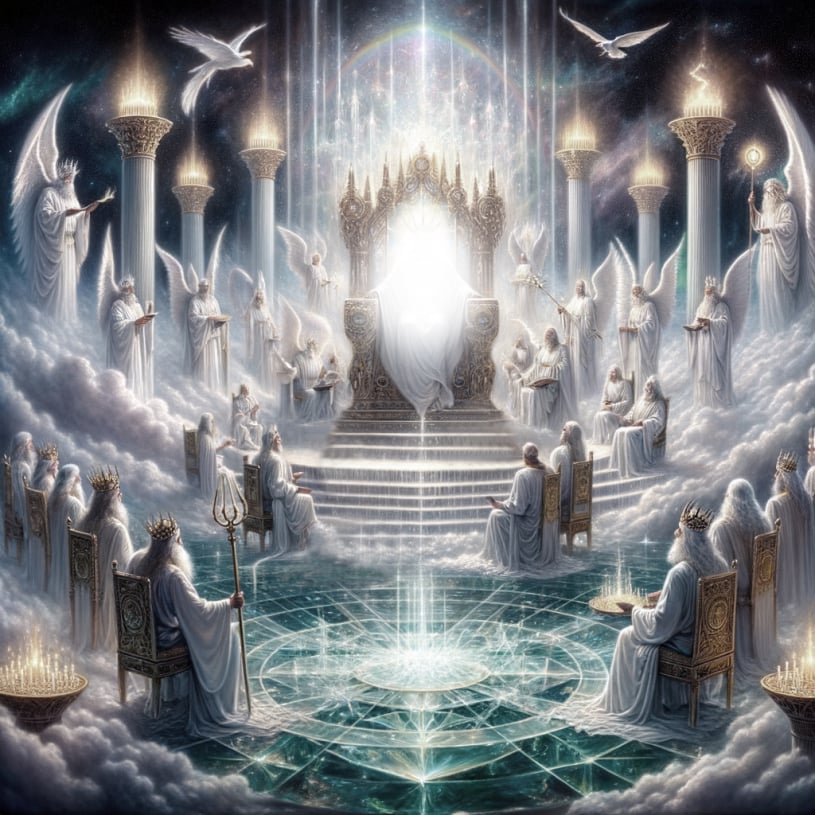
This is not the only instance in which God used the pronoun “us” to refer to Him and His angels. In Isaiah 6:8, 1-2, we find God asking in the presence of seraphim or angels, “Who will go for us?”

It is indeed to the angels that God said “Let us make man in our image, after our likeness” since they were already in existence before the creation of the world and of man. It does not mean, however, that they are God’s co-creators, for God, being Almighty, does not need one. Hence, the belief that Christ is God’s co-creator is bereft of biblical foundation. Even the very belief that Christ preexisted runs counter to the teachings of the Bible. Apostle Paul provides us a definite stand as to the beginning of Jesus’ existence:
“But when the fullness of the time had come, God sent forth His Son, born of a woman, born under the law.”
(Reference: Gal. 4:4 NKJV)

The beginning of Jesus’ corporeal existence was when He was born of a woman or Mary (Matt. 1:18, 20). Before then, Christ was the “logos” of God (John 1:1a Greek Translation/James Moffatt Translation ) in the beginning before the foundation or creation of the world. The Greek word “Logos” is interpreted in English as “plan” or “calculation” (The NAS New Testament Greek Lexicon). The fact that Jesus was conceived and born is a strong proof against the belief that Christ is a creator. It proves that Christ is a part of God’s creation. In fact, Apostle Paul refers to Jesus as the “firstborn of all creation” (Col. 1: 15, New American Standard Bible). The expression “firstborn of all creation” does not imply preexistence, especially when it is compared to Apostle Peter’s teaching:

He (Christ) indeed was foreordained before the foundation of the world, but was manifest in these last times for you.”
(Reference: I Pet. 1:20, NKJV, Emphasis Mine)
In other words, even before the world was created, God’s plan or “logos” was already realized through His prophets in the Holy Scriptures concerning the Lord Jesus Christ (Rom. 1:2-3; John 1:1a).

CREATED THROUGH AND FOR CHRIST

Other people ask, “If Christ did not have a prior existence and He did not create us, why then did Apostle John say that ‘All things were made through Him and without Him nothing was made that was made’?” In Colossians 1:16, Apostle Paul writes:
“For through him God created everything in heaven and on earth, … God created the whole universe through him and for him.”
(Reference: Today’s English Version)
From the Greek translation of Colossians 1:16, when applying the Greek rule, “dia” in “di’ autoứ “ (“through him”) means “INTERMEDIARY.” The word “INTERMEDIARY” means “MEDIATOR” according to (Merriam dictionary, p. 266). Indeed, Christ is the mediator between the one true God and man:
“For there is one God and one mediator between God and men, the man Christ Jesus.”
(Reference: I Timothy 2:5 NIV,  Emphasis Mine)
Even Bible Scholars attest to this. This is what the book Bible Knowledge Commentary states:
“The third characteristic of Christ is that by Him all things were created. In fact, all things were created by Him (‎di’ ‎‎autou‎, instrumental Cause) and for Him (‎eis ‎‎auton‎, final Cause), and in Him (‎en ‎‎auto‎-) they hold together (He is the constituting or conserving Cause). Christ is not only the One through whom all things came to be, but also the One by whom they continue to exist. Two other New Testament verses parallel this description of Christ: “Through Him all things were made” (John 1:3), and Christ the Son is the One “through whom [the Father] made the universe” (Heb 1:2). The Father, then, is the ultimate Source (efficient Cause), and the Son is the mediating Cause of the world.”
(Reference: Bible Knowledge Commentary/New Testament Copyright © 1983, 2000 Cook Communications Ministries, Emphasis Mine)
This is the reason why “Wuest” rendered Colossians 1:16 as follows:
“Because in Him were created all things in the heavens and upon the earth, the visible things and the invisible ones, whether they are thrones or lordships or principalities or authorities. All things through Him as intermediate agent and with a view to Him stand created.”
(Reference: Col 1:16 Wuest, Emphasis Mine)
Thus, all things were made “through Him and for Him as an intermediate agent” or as the mediator between God and man.
God created the whole universe through Christ and for Christ. The clear distinction between God the creator and Christ through whom God created the whole universe can be seen here. God created the whole universe through Christ in the sense that through Christ, man will be reconciled to God. This is proven in the context of the Col. 1:16;  “through him is further explained in the succeeding verses:
“And through him to reconcile to himself all things by making peace through his blood, shed on the cross. Once you were alienated from God and were enemies in your minds because of your evil behavior. But now he has reconciled you by Christ’s physical body through death to present you holy in his sight, without blemish and free from accusation …”
(Reference: Col. 1:20-22, New International Version,  Emphasis Mine)
It is through Christ, through His blood, that all who were once enemies of God will be reconciled to Him. Furthermore, God appointed Christ to be the mediator between God and men as proven in I Timothy 2:5:
“For there is one God and one mediator between God and men, the man Christ Jesus.”
(Reference: I Timothy 2:5 NIV,  Emphasis Mine)

Notice the distinction between God and Christ, between the One to whom Christ will mediate men, and Christ who is the one Mediator between God and men. Moreover, Apostle Paul teaches that the one mediator to God is the Man (not God) Christ Jesus.

Before the world was created, God had already chosen us to belong to Christ as taught by Apostle Paul in Ephesians 1:4, 7:

God chose us to belong to Christ before the world was created. He chose us to be holy and without blame in his eyes We have been set free because of what Christ has done. Through his blood our sins have been forgiven. We have been set free because God’s grace is so rich.”
(Reference: New International Revised Version, Emphasis Mine)
God chose us to belong to Christ “to be holy and without blame.” Though man sinned and was condemned to suffer the eternal punishment (Rom. 6:23; Rev. 20:14), nevertheless, he can be counted holy and without blame through the blood of Christ. Only through the blood of Christ shall man’s sins be forgiven (Heb. 9:14).
God, in His infinite wisdom, knew that man would eventually sin and fall short of His glory (Rom. 3:23). It would have then become meaningless for God to create man only to punish him in the end, knowing that man would fall to sin. So before creating man, He had already foreordained a Redeemer and a Mediator, the Lord Jesus Christ, so that despite man’s sins, he may still have the chance to receive the grace of salvation. Without Christ and without the shedding of His blood, there is no forgiveness (Heb. 9:22). Without forgiveness, there is no salvation (John 8:24). Without any hope for salvation, man will only end up in destruction. In other words, without Christ who will both redeem man from his sins and mediate him to God, the creation of man would only be rendered useless. And if the creation of man would only be rendered useless, the world that God created for man would also be rendered useless. Thus, “Without Him [Christ] nothing was made that was made.”
John 1:3, therefore, is about the redemptive and mediative roles that Christ fulfilled as foreordained by God even before the creation of the world. It teaches neither that Christ is the true God nor that Christ is the creator of the world and of man. In truth, the belief that Christ is the true God and creator is diametrically opposed to the fundamental teaching of the Bible. In His intercessory prayer, the Lord Jesus said to the Father:
“After Jesus had said this, he looked up to heaven and said, ‘Father…
And this is eternal life: to know you, the only true God, and the one whom you sent—Jesus the Messiah.”
(Reference: John 17:1,3 ISV, Emphasis Mine)
When asked with the same question that Jesus asked His disciples, “Who do you say I am?” Christians must speak up and say, “You are the Messiah, the Son of the living God. You are the greatest of all those sent by God. You are our Lord, Savior and only Mediator to the Father” (Acts 2:36; Acts 5:31; I Tim. 2:5).

IN CONCLUSION

1

Jesus Christ is not the Creator nor the True God but the Son of God and the Messiah whom God sent.

2

It was God and He “all alone” and declared “by myself” who created the heavens and earth and Christ as the intermediate agent or as the One mediator between God and man is why all things were created “through him and for him.” Hence, Christ did not physically create anything.  Through Christ the true Christians are reconcile through His blood.

3

WE KINDLY EXTEND our visitors an invitation to explore the pristine, unadulterated teachings of Christ and His apostles as they were taught in the first-century Church Of Christ. Therefore, do not be deceived, but investigate the truth and learn about “…the simplicity that is in Christ.” (II Cor. 11:3). These teachings presented in the Iglesia Ni Cristo (Church Of Christ) is the path that leads to eternal life for all on that appointed day of Judgment:

The Truth about God and Jesus Christ

SUPPORTERS OF THE BELIEF in the divinity of Christ, also known as the Christ-is-God or the God-man doctrine, assert that God exists as a trinity consisting of the Father, Son, and Holy Spirit. Although they are three in nature and considered distinct beings, proponents maintain that they form a single God. The concept of the Trinity lacks explicit biblical endorsement; thus, proponents often argue that it represents a profound mystery beyond human comprehension and should be accepted by faith alone.

Reach Out

If you wish to acquire a deeper understanding of our Church Doctrines and have any questions, please do not hesitate to reach out to us. We would be delighted to direct you to one of our local resident ministers in your vicinity. Kindly include any queries you may have so that we may forward your inquiry in advance. Thank you.

Please note, we only read and respond to messages that do not contain hate speech or insults...

“Do not let unwholesome [foul, profane, worthless, vulgar] words ever come out of your mouth, but only such speech as is good for building up others, according to the need and the occasion, so that it will be a blessing to those who hear [you speak].”
(Eph. 4:29, Amplified Bible)
“Love endures with patience and serenity, love is kind and thoughtful, and is not jealous or envious; love does not brag and is not proud or arrogant. It is not rude; it is not self-seeking, it is not provoked [nor overly sensitive and easily angered]; it does not take into account a wrong endured.”
(1 Corinthians 13:4-5, Amplified Bible)