The Truth Behind The Qur'an Vs The Bible
THE CHRISTIANS regard the Bible as their sacred scriptures, where the words of God are written. For true Christians, the Bible is the sole basis of their faith. Muslims also regard the Quran as their sacred scriptures, and they believe the Quran was revealed to Muhammad through the angel Gabriel word for word. So, what are the differences between the two books?
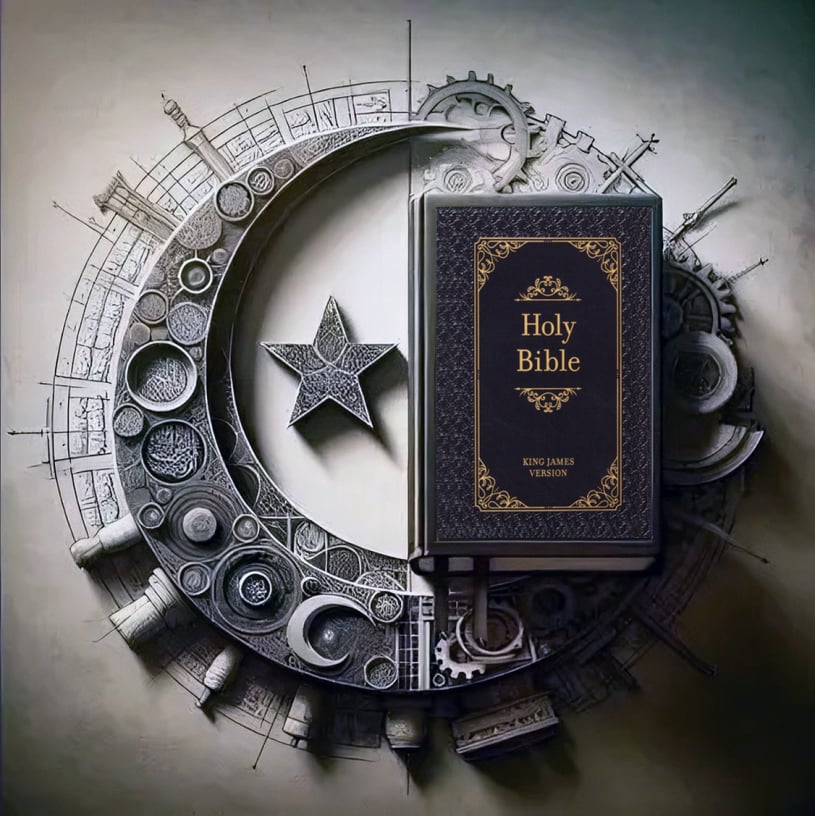
PHYSICAL DIFFERENCES
The Bible is a library, a collection of sixty-six books written over a span of 1,500 years. Genesis, the first book, was written about 1447-1407 BC, and Revelation, the last book, was written about 90-95 A.D. The Bible is written by more than forty inspired writers.
The Qur’an is a single book, comparable in length to the New Testament. The “standard Qur’an” was written by a single man.
Take note that if you are going to read the whole Bible, you can see that it seems a single writer wrote it in a particular period or time because of its unity. Remarkably, the Bible is not a single book but a collection of 66 books written by 40 men in a span of 1,500 years. If there is unity in Qur’an, what’s remarkable about that for it was done by a single man in a particular time or period?
ON DIVINE INSPIRATION
The Christians firmly believe that the Bible is divinely inspired, and the Muslims also claim that the Qur’an is divinely inspired. “Divine inspiration” means that the writer was truly inspired by God as a prophet or apostle.
The Bible is divinely inspired, for those who wrote the books were the inspired prophets and apostles themselves. The first five books, Genesis, Exodus, Leviticus, Numbers, and Deuteronomy, were written by the inspired prophet Moses himself. The Book of Joshua was written by Joshua. The books of Samuel were written by the prophets Nathan and Gad. The Book of Isaiah was written by Isaiah.
Contrary to popular belief, it was not Muhammad who wrote the Qur’an, and he never wrote anything. In fact, there is no evidence that he composed any texts himself. The book called “Qur’an” never existed during his lifetime. The assertion or statement that the Quran was fully written down during Muhammad’s lifetime is generally considered a claim made by Muslims today, but their Hadith and Sahih do not agree or support this view. Let us first quote the admission of modern Muslims. In a book entitled “Islam in Focus” this is what they admitted:

“…he consulted (Abu Bakr) the leading authorities and then entrusted Zayd Ibn Thabit, Muhammad’s Chief Scribe of Revelations, to compile a standard and complete copy of the Book…”
(Reference: Islam in Focus by Abdalati, Hammudah, p.219)
This book, authored and published by Muslims, admitted that the “standard Qur’an” was done by Zayd Ibn Thabit, who Abu Bakr commissioned. Abu Bakr was the “first caliph” (he succeeded Muhammad). Thus, the Qur’an was compiled after the death of Muhammad. But did Zayd only “collect” and “compile” those already written during Muhammad’s lifetime? This is what Sahih al-Bukhari admitted (Sahih Al-Bhukari, together with Sahih Al-Muslim, these two are considered by many Muslims as semi-canonical books, these are collections of Hadith or Islamic traditions):
“Accordingly, I sought out the Qur’an: I gather it together from leafless palm-branches and thin white stones and men’s breasts.”
(Reference: Sahih al-Bhukari, Book 66, Hadith 8)
According to the testimony of Zayd himself, when he was requested by Abu Bakr to search out the various Qur’an and gather it together, he responded “I sought out the Qur’an: I gather it together from leafless palm-branches and thin white stones and men’s breasts.”
Remember that the “Qur’an” they were referring was not the “book” called Qur’an, but “Qur’an” that recited by Muhammad as “divine revelations” revealed to him. He seek out those “Qur’an” and what he found were those in “leafless palm-branches, thin white stones and men’s breasts.” Divine revelation of God written in “leafless palm-branches and thin white stones”? Are these reliable and credible? Actually great numbers came from “men’s breasts” as we will see later.
Now, let us first see why the sudden move of collecting the “Qur’an” resulted in having a “standard written Qur’an”? This is what the Islamic traditions tell us:
“Abu Bakr sent someone to call me when Yamama people were killed. Umar was there with him. Abu Bakr said: ‘On the day of Yamama, Umar came to me and said that the reciters of the Qur’an were killed. He was afraid that others might be killed elsewhere. This indicates the loss of much of the Qur’an. He suggested that I command that the Qur’an be compiled.’ I asked Umar: ‘How would you do something that the Prophet of Allah did not do?’ Umar kept telling me to think about it until Allah made my heart cheerful. I took on Umar’s perspective. Abu Bakr said to me: ‘We do not doubt that you are a wise young man. You used to write down the revelation for the Prophet of Allah. So trace the Qur’an and compile it.’ I said: ‘By Allah, if they had chosen me to move the mountain from its place, it would have been easier than compiling the Qur’an. I argued: ‘How would you do something the Prophet of Allah did not do?’ He replied: ‘By Allah, this is good!’ Therefore, I continued compiling it from palm branched, thin stones, and the chests of men….The leaves (suhuf) were with Abu Bakr until he died; then they were handed down to Umar, then to Hafsah, Umar’s daughter.”
حَدَّثَنَا مُوسَى بْنُ إِسْمَاعِيلَ، عَنْ إِبْرَاهِيمَ بْنِ سَعْدٍ، حَدَّثَنَا ابْنُ شِهَابٍ، عَنْ عُبَيْدِ بْنِ السَّبَّاقِ، أَنَّ زَيْدَ بْنَ ثَابِتٍ ـ رضى الله عنه ـ قَالَ أَرْسَلَ إِلَىَّ أَبُو بَكْرٍ مَقْتَلَ أَهْلِ الْيَمَامَةِ فَإِذَا عُمَرُ بْنُ الْخَطَّابِ عِنْدَهُ قَالَ أَبُو بَكْرٍ ـ رضى الله عنه ـ إِنَّ عُمَرَ أَتَانِي فَقَالَ إِنَّ الْقَتْلَ قَدِ اسْتَحَرَّ يَوْمَ الْيَمَامَةِ بِقُرَّاءِ الْقُرْآنِ وَإِنِّي أَخْشَى أَنْ يَسْتَحِرَّ الْقَتْلُ بِالْقُرَّاءِ بِالْمَوَاطِنِ، فَيَذْهَبَ كَثِيرٌ مِنَ الْقُرْآنِ وَإِنِّي أَرَى أَنْ تَأْمُرَ بِجَمْعِ الْقُرْآنِ. قُلْتُ لِعُمَرَ كَيْفَ تَفْعَلُ شَيْئًا لَمْ يَفْعَلْهُ رَسُولُ اللَّهِ صلى الله عليه وسلم قَالَ عُمَرُ هَذَا وَاللَّهِ خَيْرٌ. فَلَمْ يَزَلْ عُمَرُ يُرَاجِعُنِي حَتَّى شَرَحَ اللَّهُ صَدْرِي لِذَلِكَ، وَرَأَيْتُ فِي ذَلِكَ الَّذِي رَأَى عُمَرُ. قَالَ زَيْدٌ قَالَ أَبُو بَكْرٍ إِنَّكَ رَجُلٌ شَابٌّ عَاقِلٌ لاَ نَتَّهِمُكَ، وَقَدْ كُنْتَ تَكْتُبُ الْوَحْىَ لِرَسُولِ اللَّهِ صلى الله عليه وسلم فَتَتَبَّعِ الْقُرْآنَ فَاجْمَعْهُ فَوَاللَّهِ لَوْ كَلَّفُونِي نَقْلَ جَبَلٍ مِنَ الْجِبَالِ مَا كَانَ أَثْقَلَ عَلَىَّ مِمَّا أَمَرَنِي مِنْ جَمْعِ الْقُرْآنِ قُلْتُ كَيْفَ تَفْعَلُونَ شَيْئًا لَمْ يَفْعَلْهُ رَسُولُ اللَّهِ صلى الله عليه وسلم قَالَ هُوَ وَاللَّهِ خَيْرٌ فَلَمْ يَزَلْ أَبُو بَكْرٍ يُرَاجِعُنِي حَتَّى شَرَحَ اللَّهُ صَدْرِي لِلَّذِي شَرَحَ لَهُ صَدْرَ أَبِي بَكْرٍ وَعُمَرَ ـ رضى الله عنهما ـ فَتَتَبَّعْتُ الْقُرْآنَ أَجْمَعُهُ مِنَ الْعُسُبِ وَاللِّخَافِ وَصُدُورِ الرِّجَالِ حَتَّى وَجَدْتُ آخِرَ سُورَةِ التَّوْبَةِ مَعَ أَبِي خُزَيْمَةَ الأَنْصَارِيِّ لَمْ أَجِدْهَا مَعَ أَحَدٍ غَيْرَهُ {لَقَدْ جَاءَكُمْ رَسُولٌ مِنْ أَنْفُسِكُمْ عَزِيزٌ عَلَيْهِ مَا عَنِتُّمْ} حَتَّى خَاتِمَةِ بَرَاءَةَ، فَكَانَتِ الصُّحُفُ عِنْدَ أَبِي بَكْرٍ حَتَّى تَوَفَّاهُ اللَّهُ ثُمَّ عِنْدَ عُمَرَ حَيَاتَهُ ثُمَّ عِنْدَ حَفْصَةَ بِنْتِ عُمَرَ ـ رضى الله عنه ـ.
(Reference: Sahih Al-Bhukari, Book 66, Hadith 8)
Let us be reminded that the “Qur’an” compiled by Zayd was not a “written Qur’an.” The book “Qur’an” was not written, or it did not exist during the lifetime of Muhammad. If there were any revelations of Muhammad written during his lifetime, then possibly were very few, just a small fraction. Great numbers were found in “men’s breast” or “memorized” only in their hearts by Muhammad’s companions and followers. As proof, when Abu Bakr commanded Umar to tell Zayd the task of compiling the “Qur’an,” he replied, “How would you do something that the Prophet of Allah did not do?”
When Abu Bakr said to Zayd that “We do not doubt that you are a wise young man. You used to write down the revelation for the Prophet of Allah. So trace the Qur’an and compile it.” Zayd answered, “By Allah, if they had chosen me to move the mountain from its place, it would have been easier than compiling the Qur’an…How would you do something the Prophet of Allah did not do?” Take note that if Zayd have been written all or many of the “revelations” recited by Muhammad during the latter’s lifetime, he would not say such words, “if they had chosen me to move the mountain from its place, it would have been easier than compiling the Qur’an.” Zayd again said, “How would you do something the Prophet of Allah did not do?” This only proves that “Qur’an was not written and compiled during the lifetime of Muhammad.” The book called “Qur’an” does not exist during the lifetime of Muhammad. The Qur’an was put in writing after Muhammad’s death by a young man commissioned by Abu Bakr, named Zayd Ibn Thabit.
Why did Abu Bakr commission Zayd to make the book that is now called the Qur’an? During the Battle of Yamama, many Muslims were killed. Abu Bakr said, “‘On the day of Yamama, Umar came to me and said that the reciters of the Qur’an were killed. He was afraid that others might be killed elsewhere. This indicates the loss of much of the Qur’an.” This proves (1) many “revelations” recited to them by Muhammad were not put in writing during his lifetime but only memorized by his followers, and (2) not all recited by Muhammad were included in the book made by Zayd (thus refuting the alleged “perfect preservation” of Muhammad’s revelations or of Qur’an).
Although the Lord Jesus Christ did not write any book in the Bible, the writers of the New Testament books were apostles and ministers of the Gospel, like the Apostle John, Apostle Paul, and Apostle Peter. Was Zayd Ibn Thabit “an apostle of Allah”? Apostle Paul said:
“Now then, we are ambassadors for Christ, as though God were pleading through us: we implore you on Christ’s behalf, be reconciled to God.”
(Reference: II Corinthians 5:20, NKJV)
Can Zayd Ibn Thabit say the same for Muhammad?
Therefore, if the books of the Bible were written by the prophets and the apostles themselves, the Qur’an was not written by the prophet of Islam, not written by Muhammad himself, but only by a young man commissioned by Abu Bakr when Muhammad was already dead. So, the books of the Bible claimed “divine inspiration” because the writers of the book were the divine prophets and apostles themselves. How about Qur’an? How can it claim “divine inspiration” if it is not written by Muhammad himself but by a young man commissioned by Abu Bakr? Was Zayd himself an inspired prophet or apostle of Allah?
WHO WROTE THE BOOK CALLED THE QUR'AN, AND WHO ORDERED THEM TO WRITE IT?
It is clear that the Quran verses collected by Zayd implies that he is not the author. Many other disciples had already memorized these verses. Zayd simply gathered and collected the verses into one book, providing evidence and witnesses for every verse.
Thus, what we can witness here is that the “Qur’an” was authored and written by Zayd Bin Thabit as testified by the Islamic traditions:
“(The Caliph ‘Uthman ordered Zaid bin Thabit, Sa’id bin Al-As, ‘Abdullah bin Az-Zubair and ‘Abdur- Rahman bin Al-Harith bin Hisham to write the Qur’an in the form of a book (Mushafs) and said to them. ‘In case you disagree with Zaid bin Thabit (Al-Ansari) regarding any dialectic Arabic utterance of the Qur’an, then write it in the dialect of Quraish, for the Qur’an was revealed in this dialect.’ So they did it.”
Narrated Anas bin Malik:
حَدَّثَنَا أَبُو الْيَمَانِ، حَدَّثَنَا شُعَيْبٌ، عَنِ الزُّهْرِيِّ، وَأَخْبَرَنِي أَنَسُ بْنُ مَالِكٍ، قَالَ فَأَمَرَ عُثْمَانُ زَيْدَ بْنَ ثَابِتٍ وَسَعِيدَ بْنَ الْعَاصِ وَعَبْدَ اللَّهِ بْنَ الزُّبَيْرِ وَعَبْدَ الرَّحْمَنِ بْنَ الْحَارِثِ بْنِ هِشَامٍ أَنْ يَنْسَخُوهَا، فِي الْمَصَاحِفِ وَقَالَ لَهُمْ إِذَا اخْتَلَفْتُمْ أَنْتُمْ وَزَيْدُ بْنُ ثَابِتٍ فِي عَرَبِيَّةٍ مِنْ عَرَبِيَّةِ الْقُرْآنِ فَاكْتُبُوهَا بِلِسَانِ قُرَيْشٍ، فَإِنَّ الْقُرْآنَ أُنْزِلَ بِلِسَانِهِمْ فَفَعَلُوا.
(Reference: Sahih Al-Bhukari, Book 66, Hadith 6, Emphasis Mine)
Please take note of the following:
a
According to Islamic traditions, Caliph Uthman ordered these men to write the Book called “Qur’an.” As compared to the Bible, it was God Himself who ordered the inspired prophets and apostles to write the books of the Bible as what the Lord God commanded Prophet Jeremiah:
“Thus speaks the LORD God of Israel, saying: ‘Write in a book for yourself all the words that I have spoken to you.“
(Reference: Jeremiah 30:2 NKJV, Emphasis Mine)
b
Indeed, Qur’an was written by these men. These words of Uthman testify that these men were the author, not only collectors but writers, of the book called Qur’an, “In case you disagree with Zaid bin Thabit (Al-Ansari) regarding any dialectic Arabic utterance of the Qur’an, then write it in the dialect of Quraish.”
While, during the writing of the Bible, God guided and guarded the inspired writers and ordered them write only what He ordered them to write:
“Now when the seven thunders uttered their voices, I was about to write; but I heard a voice from heaven saying to me, ‘Seal up the things which the seven thunders uttered, and do not write them’.“
(Reference: Revelation 10:4 NKJV, Emphasis Mine)
c
Those written by Zayd came from the disciples and followers of the prophet of Islam (“this was already memorized by many other disciples, all what he did is that he collected the verses in one book with evidence and witnesses for every verse”).
Unlike the Bible, those written in the books of the Bible were not collected from those who “heard” it from the prophets and apostles, but what the prophets and apostles themselves heard from God because they themselves who wrote it:
“Thus speaks the LORD God of Israel, saying: ‘Write in a book for yourself all the words that I have spoken to you.”
(Reference: Jeremiah 30:2 NKJV, Emphasis Mine)
Therefore, the Qur’an was not written by Muhammad; it did not exist during his lifetime. After his death, it was compiled and written by individuals who were neither prophets nor apostles. Only Abu Bakr and Uthman ordered the writing of the Qur’an, and their sources were those who heard the utterances of Muhammed. Unlike the books of the Bible, which were written by inspired writers of God whom God Himself commanded these writers to document His words, as indicated by the directive, “Write in a book for yourself all the words that I have spoken to you.”
Truly, there are great differences between the Bible and the Qur’an. The basis of the Bible’s divine inspiration comes from none other than God Himself, contrary to the basis of the Qur’an which remains to be no more than a “claim” that the book is derived from “divine inspiration.” The historical evidence is overwhelming and undeniable.
There are still many great differences between the Qur’an and the Bible that can be discussed; however, these examples are sufficed enough to demonstrate that the Bible is a holy book that cannot be compared to any other.
IN CONCLUSION
1
It is evident that the Qur’an does not stand up to scrutiny of being a book derived from “divine inspiration,” as many have been led to believe.
2
This book, authored and published by Muslims, admitted that the “standard Qur’an” was done by Zayd Ibn Thabit, who Abu Bakr commissioned.
3
When Abu Bakr said to Zayd that “We do not doubt that you are a wise young man. You used to write down the revelation for the Prophet of Allah. So trace the Qur’an and compile it.” Zayd answered, “By Allah, if they had chosen me to move the mountain from its place, it would have been easier than compiling the Qur’an…How would you do something the Prophet of Allah did not do?” Take note that if Zayd have been written all or many of the “revelations” recited by Muhammad during the latter’s lifetime, he would not say such words, “if they had chosen me to move the mountain from its place, it would have been easier than compiling the Qur’an.” Zayd again said, “How would you do something the Prophet of Allah did not do?” This only proves that “Qur’an was not written and compiled during the lifetime of Muhammad.” The book called “Qur’an” does not exist during the lifetime of Muhammad. The Qur’an was put in writing after Muhammad’s death by a young man commissioned by Abu Bakr, named Zayd Ibn Thabit.
4
The Qur’an was not written by Muhammad; it did not exist during his lifetime. After his death, it was compiled and written by individuals who were neither prophets nor apostles. Only Abu Bakr and Uthman ordered the writing of the Qur’an, and their sources were those who heard the utterances of Muhammed.
5
WE KINDLY EXTEND our visitors an invitation to explore the pristine, unadulterated teachings of Christ and His apostles as they were taught in the first-century Church Of Christ:
The Truth Behind The Qur'an
THE FORTHCOMING ARTICLES will explore the historical evidence regarding the Qur’an and its origins. These articles are crafted with a sense of dedication and respect, aimed at uncovering the truth and enlightening our Muslim colleagues. It is our hope that this endeavor will facilitate a deeper connection to the authentic words of God.

Reach Out
If you wish to acquire a deeper understanding of our Church Doctrines and have any questions, please do not hesitate to reach out to us. We would be delighted to direct you to one of our local resident ministers in your vicinity. Kindly include any queries you may have so that we may forward your inquiry in advance. Thank you.

Please note, we only read and respond to messages that do not contain hate speech or insults...
“Do not let unwholesome [foul, profane, worthless, vulgar] words ever come out of your mouth, but only such speech as is good for building up others, according to the need and the occasion, so that it will be a blessing to those who hear [you speak].”
(Eph. 4:29, Amplified Bible)
“Love endures with patience and serenity, love is kind and thoughtful, and is not jealous or envious; love does not brag and is not proud or arrogant. It is not rude; it is not self-seeking, it is not provoked [nor overly sensitive and easily angered]; it does not take into account a wrong endured.”
(1 Corinthians 13:4-5, Amplified Bible)