The Miracle of the Qur'an: Miracle or Not a Miracle at All?
FOR MUSLIMS, Qur’an was not only a revelation from Allah, but “the miracle of miracles.” The “miracle of Qur’an” is a popular doctrine accepted and upheld by Muslims.
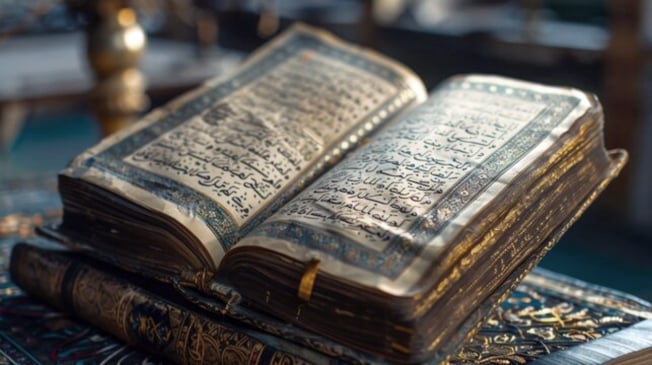
Muhammad himself claimed that the Qur’an is his miracle:

“Again and again when miracles are demanded from the Prophet of God by the cynical and frivolous few, he is made to point to the Qur’an – Message from High – as ‘The Miracle.’ THE MIRACLE OF MIRACLES And men of wisdom, people with literary and spiritual insight, who were honest enough to themselves, recognised and accepted Al-Qur’an as a genuine miracle.”
(Reference: Al-Qur’an, The Miracle of Miracles, p. 12, Emphasis Mine)
Why is this doctrine very important for Muslims? The miraculousness of the Qur’an is the “foundation of Islam and the most essential evidence for the prophethood of Muhammad”:
“This absolute confidence in the miraculousness of the Qur’an has remained unshaken among Muslims to this day. In a sense, this is the foundation of Islam and the most essential evidence for the prophethood of Muhammad…the prophetic office of the Prophet – upon whom be peace – is built upon this miracle.’ A contemporary Muslim author, Faruqi, observes that ‘Muslims do not claim any miracles for Muhammad. In their view, what proves Muhammad’s prophethood is the sublime beauty and greatness of the revelation itself, the Holy Qur’an, not any inexplicable breaches of natural law which confound human reason’.”
(Reference: (Answering Islam, p. 103-104, Emphasis Mine)
A contemporary Muslim author, Faruqi, said “Muslims do not claim any miracles for Muhammad. In their view, what proves Muhammad’s prophethood is the sublime beauty and greatness of the revelation itself, the Holy Qur’an, not any inexplicable breaches of natural law which confound human reason”
Thus, proving that the “miracle of Qur’an” is “not a miracle at all” will refute the “prophethood of Muhammad.”
THE ISLAM’S DOCTRINE OF INIMITABILITY
Ask a Muslim to prove the “miracle of Qur’an” and they will point to their doctrine called “the doctrine of inimitability.” This is how they explain their “doctrine of inimitability”:
“The Qur’an is the word of God revealed to Muhammad through the Holy Spirit Gabriel, and it is beyond human imagination to produce anything like it.” (Islam in Focus, p, 217)
(Reference: Islam in Focus by Ḥammūdah ‘Abd al-‘Āṭī, p. 217)
Muslims claim that “it is beyond human imagination to produce anything like it.” Muhammad himself claimed that only God can produce the Qur’an:
“This Qur’an is not such as can be produced by other than God…”
(Reference: Surah 10:37, ALI)
They claimed that no man can produce the like of the Qur’an and that only God can produce the Qur’an because of the “literary beauty” of Qur’an:
“They believe that Qur’an ‘is second to none in the world according to the unanimous decision of the learned men in points of diction, style, rhetoric, thoughts and soundness of laws and regulations to shape the destinies of mankind’.”
(Reference: Surah 10:37, ALI)
They claimed that the diction, style, rhetoric, thoughts and soundness of laws and regulations are second to none. Thus, they concluded the following:
“Say: ‘If the whole Of mankind and Jinns Were to gather together to produce the like of this Qur’an, they could not produce the like thereof, even if they backed up each other.”
(Reference: Surah 17:88, ALI)
For Muslims, the literary beauty of Qur’an is a miracle for no one can produce the like of it and that the diction, style, rhetoric, thoughts and soundness of laws and regulations are second to none. This is the core reason why they say that Qur’an is a “miracle.”
THE FLAWS OF THEIR ARGUMENT FOR QUR'AN
1
Even if the Qur’an is the most eloquent book in Arabic, this would hardly prove it had divine authority. The same could be argued for the most eloquent book in Hebrew, Greek, or any other language. For example, one could claim that Homer would qualify as a prophet for producing the Iliad and the Odyssey, while Shakespeare is without peer in the English Language.
2
It is logical fallacy to argue that simply because it is eloquent, that God must have said it. Not because God said it, He would say it most eloquently. The sovereign God (whom Muslims accept) could choose to speak in plain everyday language if he wished.
3
There is no logical connection between literary eloquence and divine authority.
Even if it were proven beyond a doubt that the Qur’an far surpassed all other books in eloquence, elegance, and poetry, that would no more prove its inspiration than a man’s strength would demonstrate his wisdom, nor does a woman’s beauty signify her virtue. Just because a man is the strongest in the world or a woman is the most beautiful does not mean either is a prophet of God.
4
Eloquence is highly questionable as test for divine inspiration. At best it only proves that Muhammad was extremely gifted in his oral delivery of the message based on the Islamic belief that Muhamad is a Prophet of God spreading the message which was given to him by the Angel Gabriel. After all, Mozart wrote his first symphony at the age of six! In fact, Mozart was even more talented, since his entire music corpus was produced before age thirty-five. Muslims claim that Muhammad did not begin to produce the suras of the Qur’an until age forty. But what Muslim would say that Mozart’s works are miraculous like the Qur’an?
5
The so-called “inimitability” (that no one can produce the like of it) is not a valid test for divine authority. Would Muslims accept the challenge to produce a work like Romeo and Juliet or else accept the divine inspiration of the works of Shakespeare? In fact, other religious leaders have given the beautiful literary style of their work as a sign of its divine origin. Would Muslims accept the inspiration of these works? For example, the Persian founder of the Manichaeans, Mani, ‘is said to have claimed that men should believe in him as the Paraclete (‘Helper’) Jesus promised in John 14 because he produced a book called Art and, full of beautiful pictures.’ Further, ‘he said that the book had been given him by God, that no living man could paint pictures equal in beauty to those contained in it, and that therefore it had evidently come from God Himself.’ Yet, no Muslim will accept this claim. Why then should non-Muslim accept literary beauty as a valid test for divine authority?
QUR'AN'S LITERARY BEAUTY, ELOQUENCE AND DICTION ARE SECOND TO NONE?
Even though we accept (for the sake of argument) that literary beauty and eloquence are valid tests for divine authority, still the Qur’an fails.
In terms of literary beauty and style:
“The Islamic scholar, C.G. Pfander, points out that ‘it is by no means the universal opinion of unprejudiced Arabic scholars that the literary style of the Qur’an is superior to that of all other books in the Arabic language.’ For example, ‘some doubt whether in eloquence and poetry it surpasses the Mu’allaqat, or the Magamat or Hariri, though in Muslim lands few people are courageous enough to express such an opinion’.”
(Reference: Ans. Islam, p. 187)
In terms of eloquence and diction:
“‘Eloquence‘ means ‘discourse marked by apt and fluent diction‘:
“1a: discourse marked by force and persuasiveness suggesting strong feeling or deep sincerity; esp: discourse marked by apt and fluent diction, and imaginative fervor
b: the art or power of using such discourse…”
(Reference: Webster’s’ Third New International Dictionary, unabridged, 1961, p. 737, Emphasis Mine)
“‘Diction’ means ‘correctness, clearness, or effectiveness of wordings used:
“…choice of words esp. with regard to correctness, clearness, or effectiveness: wording used…”
(Reference: Webster’s’ Third New International Dictionary, unabridged, 1961, p. 627, Emphasis Mine)
The Iranian Shi’ite scholar Ali Dashti contends, however, that the Qur’an possesses numerous grammatical irregularities. He notes that:
“The Quran contains sentences which are incomplete and fully intelligible without the aid of commentaries; foreign words, unfamiliar Arabic words, and words used with other than the normal meaning, adjectives and verbs infected without observance of the concord of gender and number; illogical and ungrammatically applied pronouns which sometimes have no referent; and predicates which in rhymed passages are often remote from the subjects… ‘to sum up, more than one hundred Quranic aberrations from the normal rules and structure of Arabic have been noted.”
(Reference: Twenty Three Years: A Study of the Prophetic Career of Mohammad by Ali Dashti, pp. 41-42, Emphasis Mine)
An example of grammatical irregularities in the Qur’an, as pointed out by Ali Dashti which can be found in numerous examples such as in (74:1; 4:160; 20:66; 2:172), and so on, one of which is:
“In verse 9 of sura 49 (ol-Hojorat), ‘If two parties of believers have started to fight each other, make peace between them’, the verb meaning ‘have started to fight’ is in the
plural, whereas it ought to be in the dual like its subject ‘two parties’.”
(Reference: Twenty Three Years: A Study of the Prophetic Career of Mohammad by Ali Dashti, p.41, Emphasis Mine)
Other examples of literary flaws in Qur’an:
“Anis A. Shorrosh lists other literary flaws in the Qur’an. For example, in sura 2:177 he points out that the word Sabireen in Arabic should have been Sabiroon because of its position in the sentence. Likewise, Sabieen in sura 5:69 is more correct Arabic than Sabioon. Also, Shorrosh notes that there is ‘a gross error in Arabic’ in sura 3:59.“
(Reference: https://jashow.org/articles/the-alleged-divine-origin-of-the-quran-part-1/#cite_ref-3, Emphasis Mine)
IN CONCLUSION
1
It is evident that the Qur’an does not stand up to scrutiny of being a book derived from “divine inspiration,” as many have been led to believe.
2
The Qur’an has too many grammatical irregularities to be considered a holy book and of eloquence. Even textual scholars of the Qur’an have pointed out the many problematic irregularities of the text, which, when compared to the Christian Bible, we don’t find these irregularities. As Ali Dashti has put it, “The Quran contains sentences which are incomplete and fully intelligible without the aid of commentaries; foreign words, unfamiliar Arabic words, and words used with other than the normal meaning, adjectives and verbs infected without observance of the concord of gender and number; illogical and ungrammatically applied pronouns which sometimes have no referent; and predicates which in rhymed passages are often remote from the subjects.”
In short, with such findings, it would be an insult to insist that this is a holy book of God.
3
WE KINDLY EXTEND our visitors an invitation to explore the pristine, unadulterated teachings of Christ and His apostles as they were taught in the first-century Church Of Christ:
Fundamental Beliefs of The "Iglesia Ni Cristo" (Church Of Christ)
WITH THE AIM of aiding others in achieving a more comprehensive understanding of the Iglesia Ni Cristo, a series of readings has been developed. These readings encompass a range of significant topics, from the nature and work of Christ to apostasy. We encourage all those who are curious or in search of truth to engage with these articles. They are designed to encapsulate the comprehensive doctrines and beliefs of the Iglesia Ni Cristo…

Reach Out
If you wish to acquire a deeper understanding of our Church Doctrines and have any questions, please do not hesitate to reach out to us. We would be delighted to direct you to one of our local resident ministers in your vicinity. Kindly include any queries you may have so that we may forward your inquiry in advance. Thank you.

Please note, we only read and respond to messages that do not contain hate speech or insults...
“Do not let unwholesome [foul, profane, worthless, vulgar] words ever come out of your mouth, but only such speech as is good for building up others, according to the need and the occasion, so that it will be a blessing to those who hear [you speak].”
(Eph. 4:29, Amplified Bible)
“Love endures with patience and serenity, love is kind and thoughtful, and is not jealous or envious; love does not brag and is not proud or arrogant. It is not rude; it is not self-seeking, it is not provoked [nor overly sensitive and easily angered]; it does not take into account a wrong endured.”
(1 Corinthians 13:4-5, Amplified Bible)