The God and Father of the Lord Jesus Christ
ONE OF THE fundamental reasons God sent His only begotten Son, Christ Jesus, was to make known to all who the true God is:
“And we know that the Son of God has come and has given us an understanding, that we may know Him who is true; and we are in Him who is true, in His Son Jesus Christ. This is the true God and eternal life.”
(Reference: I John 5:20 New King James Version, Emphasis Mine)
Therefore, it is clear the true God who has a Son came to introduce the true God which is none other than the Father.
Had Christ, during His ministry on earth, failed to teach who the true God is, He would have failed to fulfill one of the purposes God sent Him for. But such was not the case, for Christ proclaimed without ambiguity who the true God is:
“Jesus said to her, ‘Do not cling to Me, for I have not yet ascended to My Father; but go to My brethren and say to them, “I am ascending to My Father and your Father, and to My God and your God.” (John 20:17 NKJV, Emphasis Mine)

Christ wants His brethren or disciples to know that He has a God Who is none other than His Father. Christ also makes it clear that His Father is “the only true God” who sent him:
“After Jesus had said this, he looked up to heaven and said, ‘Father…
“And this is eternal life: to know you, the ONLY TRUE GOD, and the one whom you sent — Jesus the Messiah.” (John 17:1,3 ISV, Emphasis Mine)
“And this is eternal life: to know you, the ONLY TRUE GOD, and the one whom you sent — Jesus the Messiah.” (John 17:1,3 ISV, Emphasis Mine)
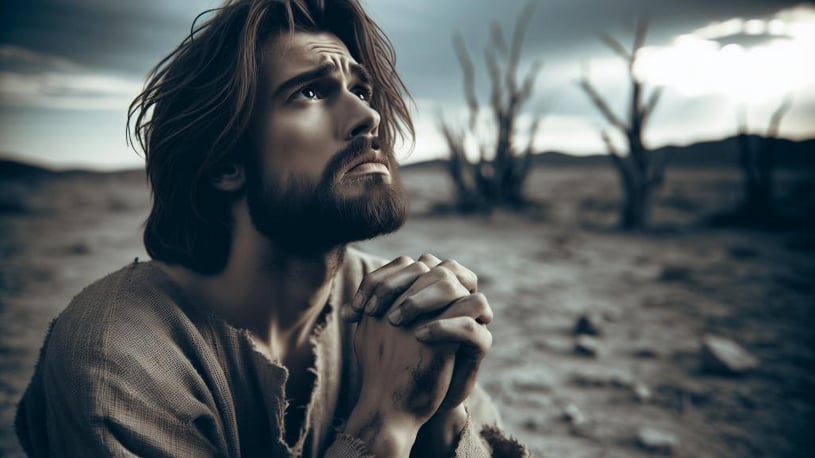
Christ reveals that the Father is “the only true God.” The word “only” denotes singularity or exclusivity: there is no one and nothing more besides the Father in being the true God. Christ also differentiates Himself from God by saying He is the One Whom the Father “sent.” Nowhere in any correctly translated Bible can one find any passage stating that Christ introduced Himself as God. Thus, the so-called doctrine of the Trinity, which claims that the Father, the Son, and the Holy Spirit are three persons in one godhead, does not have a scriptural leg to stand on.
In fact, to dispel any doubt on the part of His disciples who falsely assumed that He was God, Christ clarified that while “God is Spirit” (John 4:24 NKJV), He (Christ) does not have flesh and bones:
“But they were terrified and frightened, and supposed they had seen a spirit. And He said to them, ‘Why are you troubled? And why do doubts arise in your hearts? Behold My hands and My feet, that it is I Myself. Handle Me and see, for a spirit does not have flesh and bones as you see I have‘.”
(Reference: Luke 24:37-39 NKJV, Emphasis Mine)
Faithfully adhering to Christ’s teaching, His apostles and early disciples recognized the Father as the only true God:
“It’s really not important if there are things called gods in heaven or on earth-and there are many of these ‘gods’ and ‘lords’ out there. For us there is only one God, and he is our Father. All things came from him, and we live for him. And there is only one Lord, Jesus Christ. All things were made through him, and we also have life through him.”
(Reference: I Cor. 8:5-6 Easy-to-Read Version, Emphasis Mine)
While other people recognize more than one god, Apostle Paul declared, “For us,” that is, for the true Christians, “there is only one God” ― the Father. They learned that truth from Christ, Who told them, “My Father and your Father … My God and your God.” Thus, in their respective epistles, Apostles Paul and Peter made reference to the “God and Father of our Lord Jesus Christ” (Rom. 15:6; I Cor. 1:3; Eph. 1:3; I Pet. 1:3).
This truth about the true God has not been in any way a novel idea that has been made known only in the Christian dispensation. Even during the Old Testament times, the Father was the One acknowledged by His servants as the one true God:
“Do we not all have one Father? Did not one God create us? Why do we profane the covenant of our ancestors by being unfaithful to one another?”
(Reference: Mal. 2:10 New International Version, Emphasis Mine)
“Since ancient times no one has heard, no ear has perceived, no eye has seen any God besides you, who acts on behalf of those who wait for him. … Yet you, LORD, are our Father. We are the clay, you are the potter; we are all the work of your hand.”
(Reference: Isa. 64:4, 8 NIV, Emphasis Mine)
The true God is called the Father because all people are “the work of [His] hand” and “all things came from Him” (I Cor. 8:6 ETRV). Hence, God being the Father refers to His being the Creator and not to His gender. Being a Spirit (John 4:24) and having “no flesh and bones” or material form (Luke 24:39), God has no gender.
As the Creator, the true God’s attributes include not having a beginning or end:
“Before the mountains were created, before the earth was formed, you are God without beginning or end.”
(Reference: Psa. 90:2 Living Bible, Emphasis Mine)
While the true God is the Creator, Christ, on the other hand, is the “firstborn of all creation” (Col. 1:15 GOD’S WORD Translation), having come from God:
“Jesus said to them, ‘If God were your Father, you would love Me, for I proceeded forth and came from God; nor have I come of Myself, but He sent Me’.”
(Reference: John 8:42 NKJV, Emphasis Mine)
God’s immortality or being deathless (I Tim. 1:17) runs counter to the mortality of Christ Who died (Mark 15:37; John 19:30, 33) and Whom God raised to life (Acts 2:24). The omniscient God is also different from Christ in the sense that while God knows everything (I John 3:20), Christ has no knowledge about the day and time of His Second Advent (Matt. 24:36 NIV).
Despite all the power and attributes given to Christ by God ― perhaps is one of the reasons why others mistake Him for God ― Christ the Son will ultimately surrender to God, Who reigns completely over all:
“For the scripture says, ‘God put all things under his feet.’ It is clear, of course, that the words ‘all things’ do not include God himself, who puts all things under Christ. But when all things have been placed under Christ’s rule, then he himself, the Son, will place himself under God, who placed all things under him; and God will rule completely over all.”
(Reference: I Cor. 15:27-28 GNB, Emphasis Mine)
The God Who is over and above all, Apostle Paul pointed out, is the Father:
“one God and Father of all, who is above all, and through all, and in you all.”
(Reference: Eph. 4:6 NKJV, Emphasis Mine)
Thus, the Bible in no uncertain terms introduces the Father as the only true God. The Scriptures do not teach that Christ is God, but that “Christ is God’s” (I Cor. 3:23 NKJV).
Having no biblical basis, the alleged deity of Christ was only conceived and made a “point of orthodoxy” by the Catholic Council of Nicea in the fourth century:

“The Council of Nicea (325), therefore, made it a point of orthodoxy that the Son was ‘true God’ …”
(Reference: The Doctrine of God: A Historical Survey By Christoper B. Kaiser, p. 59, Emphasis Mine)
The Holy Spirit, purportedly the third person of the Trinity, was declared to be God in another Catholic council:
“The new council at Constantinople, presided over a new generation of fathers, basically underlined what had been done at Nicea. … Moreover, statements were added about the Holy Spirit, stressing that he, too, is God …”
(Reference: The Catholic Church Through the Ages A History By John Vidmar Op., Pub 2005, p. 57, Emphasis Mine)
The teachings that Christ and the Holy Spirit are also gods later evolved into the doctrine of the Holy Trinity:
“Trinity. The trinity of God is defined by the Church as the belief that in god are three persons who subsist in one nature. The belief as so defined was reached only in the 4th and 5th centuries AD and hence is not explicitly and formally a biblical belief.”
(Reference: Dictionary of the Bible, p. 899, Emphasis Mine)
Being merely a man-made doctrine, it took several centuries to develop and not without controversies:
“The [Trinitarian] doctrine gradually developed over several centuries and through many controversies.”
(Reference: Encyclopedia Britannica, p. 126, Emphasis Mine)
Both the Catholic and the Protestant churches have eventually embraced such erroneous beliefs:
“Some Beliefs Held in Common. It needs to be stated at the outset that there is a great body of truth in Catholicism which is also held by Evangelicals. In fact, some of the most fundamental doctrines of the one Church are also held by the other. A number of these are:
“The belief in one true God, Creator of all things…. The doctrine that God is a Trinity consisting of Father, Son, Holy Spirit …”
(Reference: Evangelical and Roman Catholic Beliefs Compared, p. 5, Emphasis Mine)
It is both crucial for people to be freed from any teaching that deviates from the biblical truth about the true God ― that He is the Father Who created all things and that He alone is God. This is one of the reasons Christ was sent: to make known who the true God is. Today, the members of Christ’s Church, Iglesia Ni Cristo, whom biblical prophecies attest to as being God’s chosen people in these last days (Isa. 41:9-10; 43:5-6; 46:11-12; John 10:16; Acts 2:39) continue carrying out the same mission: to propagate the truth about God, as He expects:
“The Lord says, ‘You people are my witnesses and the servant I chose. I chose you so that you would help people believe me. I chose you so that you would understand that ‘I Am He’—I am the true God. There was no God before me, and there will be no God after me.”
(Reference: Isa. 43:10 ETRV, Emphasis Mine)
What is at stake in not knowing this truth about God that means eternal life (John 17:3) and salvation on Judgment Day:
“He wants to save everyone. He wants everyone to learn what is true about him. The truth is this, that there is one God, and there is only one person who can make us acceptable to him. Christ Jesus, the man, is this one person.”
(Reference: I Tim. 2:4-5 Unlocked Dynamic Bible, Emphasis Mine)
IN CONCLUSION
1
WE KINDLY EXTEND our visitors an invitation to explore the pristine, unadulterated teachings of Christ and His apostles as they were taught in the first-century Church Of Christ. Learn the importance of who the true God is and how this truth means “eternal life.”:
The Truth about God and Jesus Christ
SUPPORTERS OF THE BELIEF in the divinity of Christ, also known as the Christ-is-God or the God-man doctrine, assert that God exists as a trinity consisting of the Father, Son, and Holy Spirit. Although they are three in nature and considered distinct beings, proponents maintain that they form a single God. The concept of the Trinity lacks explicit biblical endorsement; thus, proponents often argue that it represents a profound mystery beyond human comprehension and should be accepted by faith alone.

Reach Out
If you wish to acquire a deeper understanding of our Church Doctrines and have any questions, please do not hesitate to reach out to us. We would be delighted to direct you to one of our local resident ministers in your vicinity. Kindly include any queries you may have so that we may forward your inquiry in advance. Thank you.

Please note, we only read and respond to messages that do not contain hate speech or insults...
“Do not let unwholesome [foul, profane, worthless, vulgar] words ever come out of your mouth, but only such speech as is good for building up others, according to the need and the occasion, so that it will be a blessing to those who hear [you speak].”
(Eph. 4:29, Amplified Bible)
“Love endures with patience and serenity, love is kind and thoughtful, and is not jealous or envious; love does not brag and is not proud or arrogant. It is not rude; it is not self-seeking, it is not provoked [nor overly sensitive and easily angered]; it does not take into account a wrong endured.”
(1 Corinthians 13:4-5, Amplified Bible)